



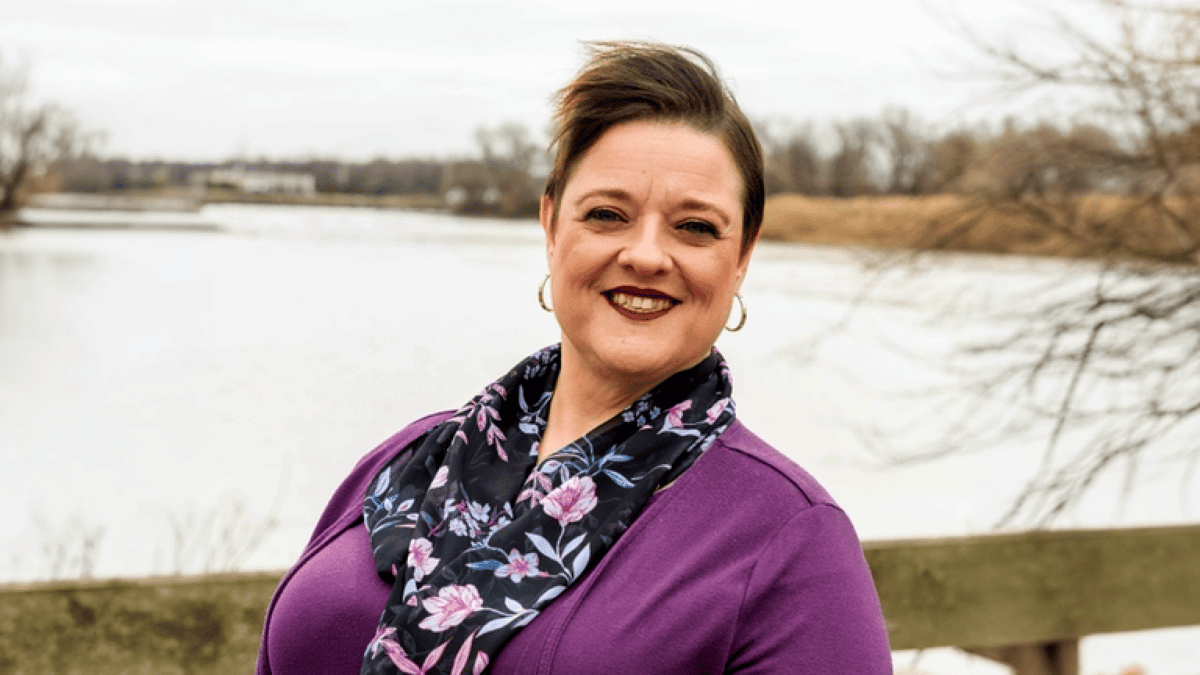
How one therapist found NOCD–and discovered a renewed sense of purpose in her work
Catherine Nakonetschny, LCSW made a small crocheted penguin on her lunch break, one of the pieces from the crochet business she runs on the side. Crocheting, she says, is how she relaxes and resets between sessions.
Before becoming a therapist at NOCD, Nakonetschny spent most of her career as a nursing home social worker, including through the height of COVID-19. She had always been passionate about working with older adults, but the pandemic was difficult and ultimately left her burned out. Ready for a change, she took a job providing remote counseling to residents of nursing homes and assisted living facilities.
“I went from one fire into another and realized that it wasn’t for me,” she says.
Then she came across a job posting for NOCD and decided to see what happened.
Soon, she found a new direction.
Nakonetschny, who holds two master’s degrees, one in counseling psychology and one in social work, joined NOCD in January 2023. Since then, she has immersed herself in exposure and response prevention (ERP) therapy and treating OCD in its many forms.
Learning a whole new language
Despite her education and years in mental health, Nakonetschny says she had barely encountered OCD in graduate school.
“I can count on one hand how many days we spent talking about OCD, and it wasn’t a day. It might have been 20 minutes,” she says.
What she had learned about ERP therapy, for instance, centered largely on phobias: someone afraid of spiders might start with pictures, progress to videos, and eventually move closer to a spider. “But there was nothing specific about OCD.”
Joining NOCD changed that.
“When I started here, it was like learning a whole new language,” she says. The training introduced her to the many ways OCD can show up beyond common stereotypes like handwashing or cleaning. “The fact that there are so many different themes that people don’t recognize. It is incredible to me.”
She was also struck by the infrastructure surrounding the clinical work. There was intensive training, a platform built around the work therapists were doing, support with regulations and billing, and documentation tools that let her finish notes without carrying them into the rest of her day.
“It was really, really well run,” she says. “That, and the commitment to getting people better. That strong mission-driven kind of thing that really is lacking in a lot of other places, honestly.”
Seeing what ERP can make possible
One Member in particular showed Nakonetschny what that commitment could look like in practice. A young person came to her with a common fear known as hit and run OCD. By then, OCD had narrowed their life considerably. So they started small.
“The very first exposure I ever did with them was to make them play Grand Theft Auto,” Nakonetschny says.
From there, we wrote worst-case scenarios for them to read while sitting in the car in the driveway. Eventually, the Member began moving the car forward and backward. Little by little, their world got bigger.
“They now drive everywhere,” she says. “They’re thriving and flourishing.”
Members like this one represent what can happen when someone commits to the difficult work of ERP.
“They are proof that the hard work that they put in reaps huge rewards at the end.”
That ability to witness progress is a big part of what keeps Nakonetschny at NOCD.
“As a therapist, you don’t normally get to see the outcome,” she says. At NOCD, she can see changes in Members’ assessment scores and in their lives. “You know you’re making a difference.”
Finding confidence in the work
Today, with many treatment conquerors and years of relationships with Members behind her, that uncertainty has been replaced by confidence. Part of that came from experience. Another part of it came from knowing she didn’t have to figure everything out alone.
“I know that I can get on Slack and put a question out and I will get a bunch of answers,” she says. “Even though we’re all spread out all over the country, there’s a sense of community here that is really important. And we’re all reaching for the same goal.”
For someone who once felt a little directionless about where her career would take her next, that shared purpose has made a difference.
“What NOCD has done for me, honestly, is reignite my passion for my job and for the work that I do. And that to me is so important. I just absolutely love working with this population.”
Looking to make an impact like Catherine? Explore therapist opportunities at NOCD.


