


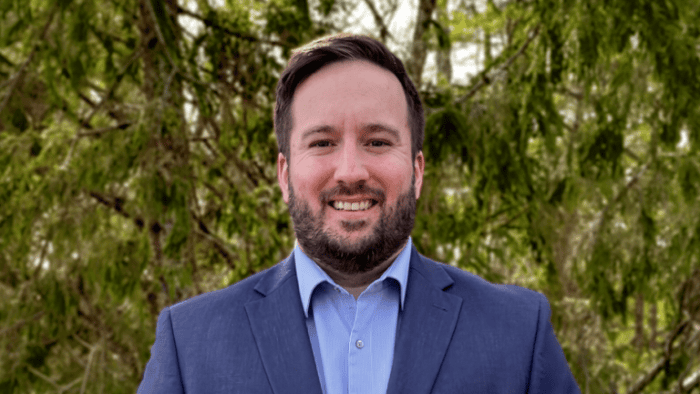
Meet Cody Fournier: The Army Veteran turned OCD therapist who found his calling through his own recovery
For years, Cody Fournier lived with OCD without knowing where to find the right help. He carried it through adolescence, into the military, and eventually into a mental health career.
Fast forward to when he found exposure and response prevention (ERP) therapy: “It changed my life for the better,” he says. Now, Fournier is a licensed therapist at NOCD with 14 years of mental health experience. The treatment that changed his life is now at the center of the work he does every day.
Living with OCD in silence
Growing up outside Boston, Fournier saw the impact mental health struggles could have on individuals, families, and communities from an early age. “There’s a lot of mental health diagnoses, a lot of stuff there that I was exposed to at a young age,” he says. “That shaped a lot of my career direction.”
He began experiencing OCD symptoms as a teenager, and when enlisted in the military after high school, those symptoms followed him. Fournier says he experienced harm-related intrusive thoughts that could make training particularly difficult. Talking about them, however, felt impossible.
“If I went and talked to someone about this, I was going to get discharged,” he explains. “It’s very isolating and very scary even to mention that.” So he locked his OCD inside himself.
Finding the treatment that changed everything
After leaving the military, finding effective treatment wasn’t immediate, and Fournier estimates that his OCD went untreated for around 15 years. And then, finally, he found ERP.
The experience gave him something beyond relief; it changed the way he thought about what was possible for other people with OCD. “It changed my life for the better.”
Turning his own recovery into a career
Fournier built a career in mental health, working with co-occurring conditions, trauma, children and adolescents, and in medical social work. After graduate school, he worked in trauma-focused therapy before deciding he wanted to specialize in OCD. He reached out to NOCD twice before landing an interview.
“And then I was hired” he says. “Once I learned even more about ERP and was able to apply those skills, I saw people getting better quicker. I was like, wow!”
For someone who knows what it feels like to spend years searching for effective care, seeing Members make progress has been especially meaningful.
“I just saw people who didn’t want to live anymore. Now they want to live. There’s no better feeling.”
What makes NOCD different
Fournier says one of the biggest differences at NOCD is that therapists aren’t treating OCD alone.
“When I meet with a client, you’re not just working with me—I have a whole team that has my back,” he says. “If I don’t know how to treat a certain symptom, I can talk with the best experts in OCD.”
That support includes ongoing consultation and opportunities for therapists to continue strengthening their skills.
“I love how NOCD really equips people with that initial baseline, base knowledge, and then continues to encourage and focus and strengthen their ability by going through consultations and having them keep building their skills.”
For Fournier, the difference between general mental health training and true OCD specialization became clear quickly. “I learned more clinically at NOCD than I did in grad school.”
Turning his story into others’ courage
Fournier has come a long way in being open about having OCD, both personally and professionally. That openness has shown him just how many people may be struggling without anyone around them realizing it.
“The more I talk about it, the more people come out of the woodwork,” he says. “People with OCD are incredibly high functioning. No one would know.”
His lived experience also shapes the environment he tries to create in therapy: collaborative, honest, motivational, and judgment-free. He knows firsthand how frightening intrusive thoughts can feel, and how intimidating ERP can sound before you’ve experienced it.
His message to someone still wondering whether to seek specialized care comes from having once been in that position himself.
“Don’t give up. Ask the questions about what you’re experiencing, but call NOCD… I promise you that you will get the right care and you will have a team of experts and specialists work as hard as they can to get you better.”
After years of untreated OCD, finding effective treatment changed Fournier’s life. Now, helping other people find it sooner has become the work he doesn’t see himself walking away from.
If his story resonates, consider joining a team that’s increasing awareness of OCD and helping people get access to effective treatment fast.