


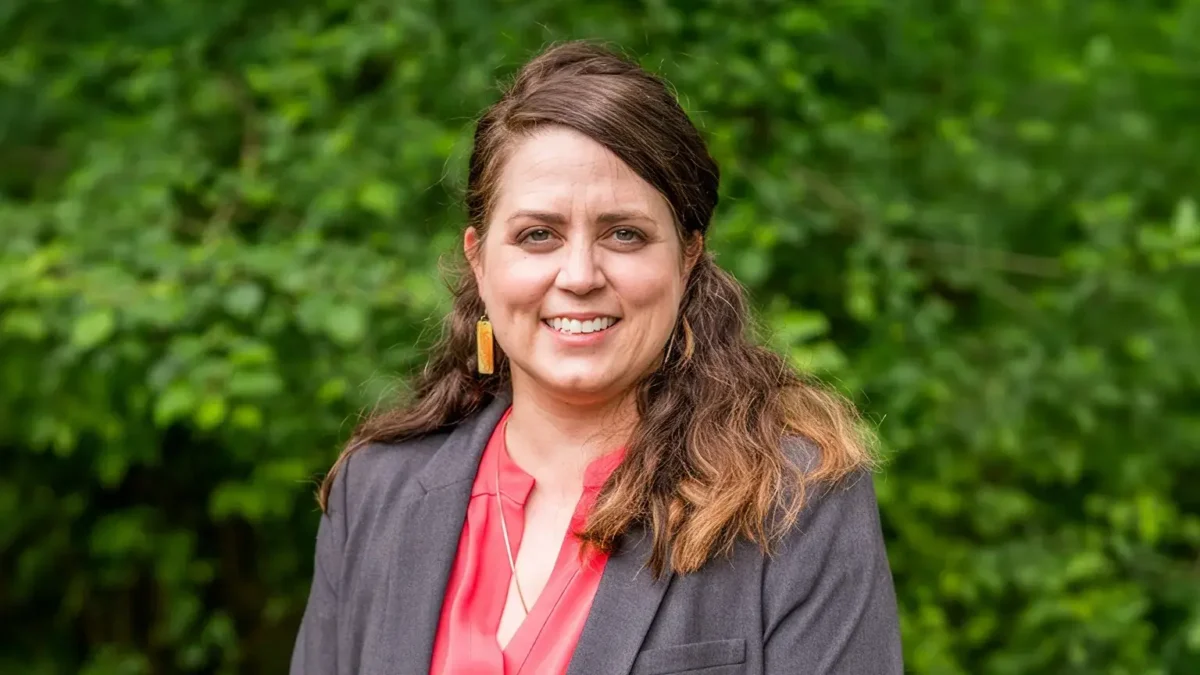
Meet Beth Keating, MA, LPC. She came to NOCD for the training and stayed for the growth, community of peers, and the impact she’s able to have on her Members
By the time Beth Keating joined NOCD, she had been a therapist for about 15 years, working across a variety of settings, including crisis work, hospitals and medical clinics, and community mental health.
Through that work, she reached a point in her career where she was looking for more training. In particular, she had worked with children who, she realized, could also benefit from exposure and response prevention (ERP) or habit reversal training (HRT), which is used for tics and body-focused repetitive behaviors (BFRBs). But she didn’t have the training to offer those treatments, so she looked for a way to gain the skills. As she explored her options, she knew she wanted more than a continuing education course. She wanted to become an expert.
She was also looking for a sense of community. At the group private practice where she worked just before NOCD, she thought she might be able to connect with other clinicians and discuss cases, but that hadn’t materialized. “I was really missing community,” she says. She wanted a place where she could connect with others doing the same work.
NOCD offered both. “I’d be able to get really good training in these evidence-based treatments and get support,” she says. As she evaluated the opportunity, she was also drawn to the consultation opportunities included with the role and the opportunity to work with experts in the field. This ability to learn from others was something she hadn’t had in a long time, and when she had it in the past, she had to pay for it. Beth joined NOCD in 2021, and she has continued to grow in her career ever since.
Becoming a specialist and growing her career
NOCD’s initial and ongoing training has been central to her growth as a clinician. Beyond ERP, she’s trained in HRT and other modalities. These trainings have given her a real sense of expertise. For example, she remembers attending her first IOCDF conference, where she sat in on the intro classes and realized she already knew the material being presented. At that time, she was less than a year into her time at NOCD, and the moment showed her just how much she’d learned.
In addition to the training, Beth has found many opportunities to keep growing as a clinician. She runs support groups, began training other therapists last year, and most recently became a clinical operations manager, supporting other therapists so they can make an impact on the Members they treat. “I felt confident enough to actually step into that manager role,” she says.
Beth reflects on how each of these experiences has allowed her to keep growing and make an impact. As a support group facilitator, for example, she has led a group for BFRBs and tics for about four years. Around 15 to 20 people join the Zoom room each week to talk about their struggles and their wins. She hears people share their experiences and helps create a supportive space for them. Someone almost always says they’re glad they came, because they’re hearing others describe feelings they didn’t know anyone else shared. “It’s really powerful,” she says.
Being part of a supportive community
At NOCD, Beth also found the community and connection she’d been looking for. Even though NOCD is a remote company, she says its culture fosters real connection. Events like the monthly trivia nights and the book club give therapists a chance to meet and get to know one another. She also attends conferences, where she sees colleagues and builds relationships. “I feel like I have more relationships here than I’ve had with many people in my work, even when I was in person,” she says.
She also feels supported by her peers and leaders, and part of that, she says, is having a voice. “I don’t know in the 20 years that I’ve been a therapist that I felt like I could actually say something and they would consider it,” she says.
That influence extends to the tools she uses every day. At past jobs, the electronic health record (EHR) was something the organization bought from an outside company, and therapists worked around it. “There was no way to influence it in any way, shape, or form,” she says. At NOCD, the technology is built in-house, which she says is really helpful. When therapists have an idea or run into something that isn’t working, the team tries to make a change. “Sometimes I joke that five years here feels like 10, because so much changes,” she says. “But it’s always been changes that are for the better.”
Seeing people regain their life from OCD
A big part of what keeps Beth at NOCD is seeing her Members regain their lives from OCD. NOCD uses measurement-based care, so Members complete assessments throughout treatment that track their symptoms over time. This allows therapists to understand how their Members are progressing through treatment.
For Beth, that’s new. Before NOCD, she says, she had no way to know how much her efforts as a talk therapist were helping. “There was nothing tracking it.” Now she can see it. She shows Members their progress on a graph, and they’re often surprised by how far they’ve come. “When you’re living it every day, it can be hard to see that change,” she says.
During her tenure at NOCD, she has supported many Members to gain treatment conqueror status, NOCD’s term for Members whose symptoms have significantly improved. “People actually get better, and I can see it,” she says. During her interview, Beth was wearing a “Life Changer” T-shirt, and she says the message reflects how she feels. “I do feel like I’m a life changer. People’s lives are better.”
Her advice comes from her own experience. At different points in her career, she says, she felt bored or questioned whether she should still be a therapist. For therapists in a similar spot who want a challenge and want to see how impactful their therapy can be, “this is a good place to do that.” “If you want to work for a place where they care about you as much as they care about the members, this is the place to do that too.”
Looking for a place to keep growing and see your impact? Explore therapist opportunities at NOCD.


