



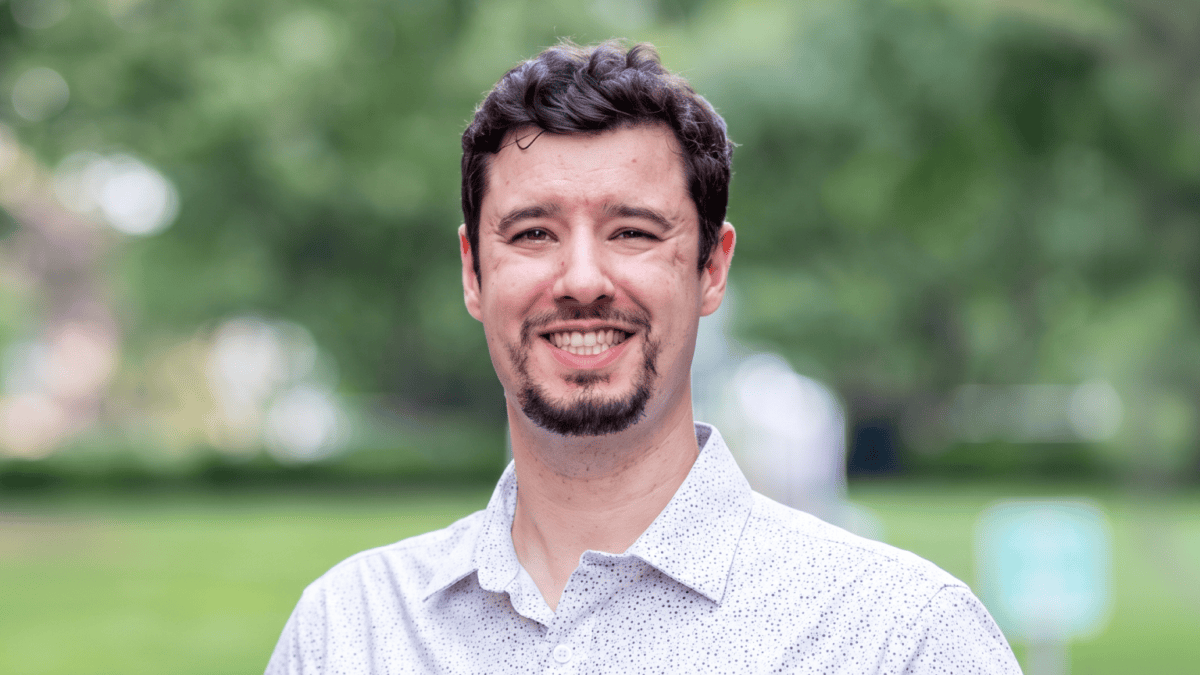
Meet Dan Gibadlo, LCSW, the therapist who came to NOCD ready to specialize in treating a population he considers “my people”
For Dan Gibadlo, specializing in OCD wasn’t a career path he stumbled into; it was something he had wanted to do long before joining NOCD.
“I’ve been wanting to specialize in OCD treatment for a couple of years now,” he says. “I went to grad school with the intention of working with this population long term.”
The reason: Gibadlo has OCD himself. And after work experiences in outpatient therapy, psychiatric hospital settings, intake and admissions, and working with substance use populations, NOCD gave him the opportunity to focus on the population he had wanted to serve.
“I really wanted to work with what I consider my people to some degree,” he says. “People that have similar struggles, similar experiences, and also provide them that place of no judgment.”
Creating a place without judgment
Gibadlo knows how important it can be for someone with OCD to have a place where they can talk openly, including about thoughts they may have struggled to say out loud.
“Being able to vocalize the thoughts, say them out loud, I think that’s one of the first steps you can take towards an OCD treatment recovery,” he says.
Since joining NOCD in August 2026, he has also seen just how broad the OCD spectrum can be. Some Members are working and going about their daily lives while still struggling with obsessions and compulsions. For others, OCD can make something as fundamental as leaving the house difficult.
He has also learned more about presentations he hadn’t previously encountered, including aspects of “just right” OCD.
For Members with less commonly recognized OCD subtypes, Gibadlo believes having someone who understands can make a big difference.
“I think having somebody that’s there that can listen without judgment and understand them, can help give them the confidence to go forward and work towards bigger, better things.”
Progress is progress
For Gibadlo, one of the best parts of working at NOCD is watching Members make changes in their lives.
“Progress is progress,” he tells them.
Even a step or two forward, he says, is progress they didn’t have the day before. Seeing Members confront their fears and begin doing things OCD had previously made them avoid is one of the most meaningful parts of the work for him.
For Gibadlo, the story represents an important part of the work at NOCD: helping Members regain their life from OCD.
“That’s something we work towards,” he says. “Not only helping you make the improvements, but helping you keep and maintain those improvements over a longer duration too.”
Seeing the progress in front of you
Gibadlo also appreciates being able to see how his Members are progressing through NOCD’s platform, Noto.
Clinicians can see information about their Members’ progress, including how many Members have become Treatment Conquerors and how long it has taken them to reach that status.
“For those of us that are visual learners, it’s great to be able to see all those little details.”
NOCD was Gibadlo’s first telehealth role. Although he describes himself as someone who isn’t “a super big tech guy,” he found the transition easy.
Taking the leap
Even though Gibadlo had wanted to specialize in OCD, there was still something that almost held him back from applying to NOCD.
“Imposter syndrome,” he says.
Looking back, he sees a parallel between taking that leap and something he teaches Members in his work.
“The only way to become comfortable again is to have a little bit of discomfort first,” he says. “We become uncomfortable to become comfortable again.”
For therapists considering NOCD, Gibadlo recommends talking to someone who already works there and hearing about their experience. But ultimately, his advice is simple.
“Just go for it,” he says. “The only way you’re gonna know if this is a path you want to go down is if you take that leap, take that risk.”
Looking to make an impact like Dan? Explore therapist opportunities at NOCD.


