

Life’s hard.
When adversity strikes, it’s natural to want someone to tell you everything’s going to be okay. After all, who wouldn’t want their pain, fear, and uncertainty to simply go away?
But taken too far, reassurance can fuel the very doubts and fears it’s meant to relieve.
What is reassurance?
Reassurance is advice, comfort, validation, or confirmation that helps reduce anxiety or increase confidence. It helps people navigate uncertainty, difficult emotions, and challenging situations.
Reassurance can take many forms. Sometimes it’s verbal, such as advice from a trusted friend. Other times, it’s non-verbal, like a hug or shoulder to cry on.
People also seek reassurance through their own actions, such as researching a concern, double-checking that something was done correctly, or asking ChatGPT for confirmation before making a decision.
When does reassurance seeking become a problem?
Reassurance often works—at least temporarily. It can quickly reduce anxiety, uncertainty, or self-doubt, creating a sense of relief in the moment.
But that relief usually doesn’t last. The same doubts, fears, or worries often return, leading a person to seek reassurance again. And again. And again.
This can look like endless research, repetitive checking behaviors, or frequently asking friends, family members, or romantic partners for validation. Over time, reassurance seeking can consume significant amounts of time, interfere with decision making, and strain relationships.
If reassurance from others becomes a primary way of making decisions, it can also become harder to feel confident in your own judgment. Over time, you may find yourself relying on other people to tell you what to think, what to do, or whether a decision is safe. When things don’t go as planned, this can create frustration, resentment, or a tendency to question the advice you were given—rather than learning to trust your own ability to navigate uncertainty.
When you ask for reassurance, you’re looking for someone else to neutralize your distress. It feels like a big relief, but in the long term, you’ll find yourself searching for reassurance every time you feel unsure.
Dr. Patrick McGrath, Chief Clinical Officer at NOCD
Excessive reassurance seeking can occur across a variety of mental health conditions, including:
- Anxiety disorders
- Panic disorder
- Depression
- Borderline personality disorder (BPD)
- Body dysmorphic disorder (BDD)
- Obsessive-compulsive disorder (OCD)
Is reassurance seeking a symptom of OCD?
While excessive reassurance seeking can occur in many situations, it is especially common in people with obsessive-compulsive disorder (OCD).
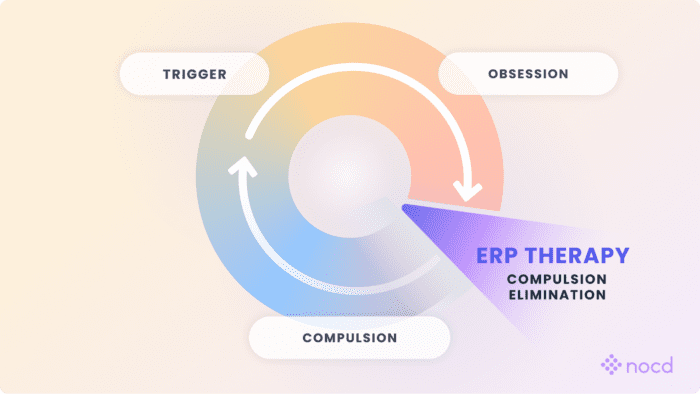
OCD is a mental health condition characterized by obsessions and compulsions. Obsessions are intrusive thoughts, images, urges, feelings, or sensations that cause distress. Compulsions are behaviors or mental acts performed to reduce that distress or gain a sense of certainty.
Reassurance seeking is one of many ways compulsions can manifest. People with OCD often repeatedly ask others for validation, search for answers online, mentally review past events, or seek confirmation that their fears won’t come true.
Why does reassurance seeking make OCD worse?
For people with OCD, reassurance seeking often becomes part of the OCD cycle. Each time a person receives reassurance, they may feel more certain, more confident, or less distressed—but they also miss the opportunity to learn that they can tolerate uncertainty on their own.
Over time, reassurance seeking can reinforce the belief that doubts must be resolved before a person can move forward. As a result, the urge to seek reassurance tends to return whenever uncertainty arises, keeping the cycle going.
What are some examples of reassurance-seeking behavior in OCD?
Because OCD can attach to almost any fear, doubt, or uncertainty, reassurance-seeking behaviors can take many different forms. Here are just a few examples:
| Obsession | Reassurance-Seeking Behavior |
| “Did I lock the door?” | Having your partner re-check the locks for you. |
| “Did I leave the stove on?” | Video chatting with a family member to show them the stove is off. |
| “Did I offend that person?” | Repeatedly asking friends whether your comment was rude or inappropriate. |
| “What if I made a mistake at work?” | Constantly checking with coworkers or supervisors if your work is correct. |
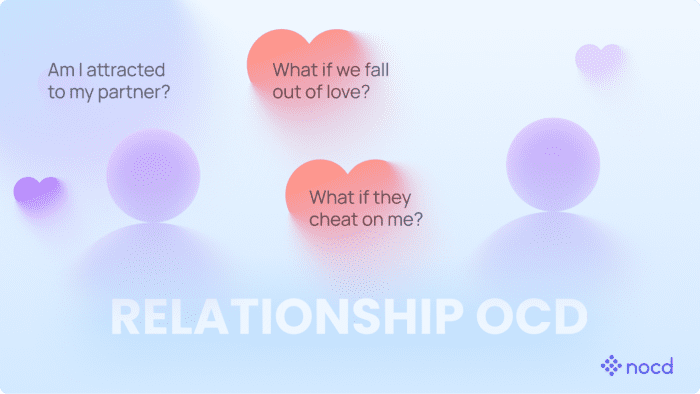
| “What if I don’t really love my partner?” | Taking online quizzes to determine whether you’re really in love. |
How do I stop reassurance seeking?
It’s important to remember that reassurance itself isn’t inherently bad. Everyone needs advice, encouragement, and emotional support from other people from time to time. The goal shouldn’t be to stop reaching out to others for support, it should be to stop relying on reassurance as the primary method of managing anxiety or doubt.
If reassurance seeking has become a compulsive response to anxiety or uncertainty, treatment can help.
For people with OCD, the most effective treatment is exposure and response prevention (ERP) therapy, a specialized form of cognitive behavioral therapy (CBT) that helps people gradually face the thoughts, fears, and uncertainties that trigger distress while resisting the urge to seek reassurance. Rather than helping people eliminate doubt, ERP teaches them how to tolerate uncertainty without relying on reassurance for relief.
Example ERP exercises for reassurance seeking may include:
- Waiting ten minutes before asking for reassurance, gradually increasing the delay over time until the urge passes.
- Choosing a topic that frequently triggers reassurance seeking and committing to asking for reassurance only once.
- Resisting the urge to ask for clarification, additional details, or stronger confirmation after receiving reassurance.
- Writing out a reassurance-seeking text or email without sending it.
- Make a low-stakes decision (e.g., choosing a restaurant, outfit, or weekend activity) without asking anyone for advice, validation, or confirmation.

Find the right OCD therapist for you
All our therapists are licensed and trained in exposure and response prevention therapy (ERP), the gold standard treatment for OCD.
Bottom line
If reassurance seeking is interfering with your relationships, decision-making, or daily life, you’re not alone—and effective treatment is available. A therapist trained in ERP can help you recognize reassurance-seeking patterns, build confidence in your ability to tolerate uncertainty, and respond to anxiety without relying on reassurance for relief.