



Many people living with obsessive-compulsive disorder (OCD) also experience other mental or behavioral health conditions, and post-traumatic stress disorder (PTSD) is among the most common. When PTSD shows up alongside OCD, the symptoms can blend together in ways that can feel confusing, exhausting, and isolating. Specialized treatment is of the utmost importance for both conditions—but there has been little research on what happens when OCD and PTSD are treated at the same time.
A new study published in The Journal of Clinical Psychiatry helps fill that gap. The research looked at 181 adults living with both OCD and PTSD who received concurrent exposure and response prevention (ERP) therapy for OCD and prolonged exposure (PE) for PTSD through NOCD’s virtual therapy platform.
Read on to learn more about the study’s findings, and the hope they offer for people living with OCD and PTSD.
The relationship between OCD and PTSD
OCD and PTSD are distinct conditions, but they frequently occur together. Research suggests that about 19% of people diagnosed with OCD meet criteria for PTSD at some point in their lives. That being said, there are many people with OCD who have never experienced trauma. Likewise, many people who experience trauma never develop OCD. For some people, though, trauma can contribute to the onset of OCD or make existing symptoms more severe. In other cases, the two conditions simply coexist.
When OCD and PTSD overlap, symptoms can interact in ways that make each condition harder to recognize and treat. Intrusive thoughts can blend with traumatic memories. Avoidance can be driven by PTSD, OCD, or both. It can be difficult to know why you’re feeling distressed, or what approach is likely to help.
Specialized treatment is crucial—and the two leading treatments for OCD and PTSD have a lot in common.
How OCD and PTSD are treated
Exposure and response prevention (ERP) therapy is the most effective treatment for OCD. It helps people gradually face situations, thoughts, feelings, or sensations that trigger obsessions while resisting compulsions. Over time, this process can teach people that anxiety will often decrease on its own, and that they can tolerate discomfort without turning to compulsions.
For PTSD, one of the most effective treatments is prolonged exposure (PE). PE helps people safely revisit trauma-related memories and situations they’ve been avoiding, reducing fear and helping those memories become less overwhelming over time.
Although ERP and PE target different symptoms, they rely on similar principles. Both treatments help people work through difficult experiences in a safe, structured way, reducing avoidance and building their tolerance for distress.
What the study found
Because both ERP and PE work through similar mechanisms, the researchers behind this study—NOCD team members Nicholas R. Farrell, PhD; Clare C. Beatty, PhD; Andreas Rhode, PhD; Mia Nuñez, PhD; Patrick B. McGrath, PhD; Larry Trusky, BS; Stephen M. Smith, BA; Jamie D. Feusner, MD—set out to examine what happens when both are delivered within a single course of therapy. The approach had been proposed in the literature, but until now it had been tested in only one study, with eight participants.
In the study, they analyzed retrospective outcomes from 181 adults diagnosed with both OCD and PTSD who received concurrent ERP and PE through the NOCD platform. Treatment was substantial: participants completed a median of 34 sessions over roughly 35 weeks, and the researchers note that people with both conditions often need longer courses of care than standard single-condition protocols.
Participants’ symptoms were tracked throughout treatment using two well-established clinical assessments: PTSD symptoms were measured using the PTSD Checklist for DSM-5 (PCL-5), while OCD symptoms were measured using the Dimensional Obsessive-Compulsive Scale (DOCS). Participants completed these assessments before starting treatment, around session 20, around session 40, and again at their final assessment.
By the end of treatment, both conditions had improved substantially:
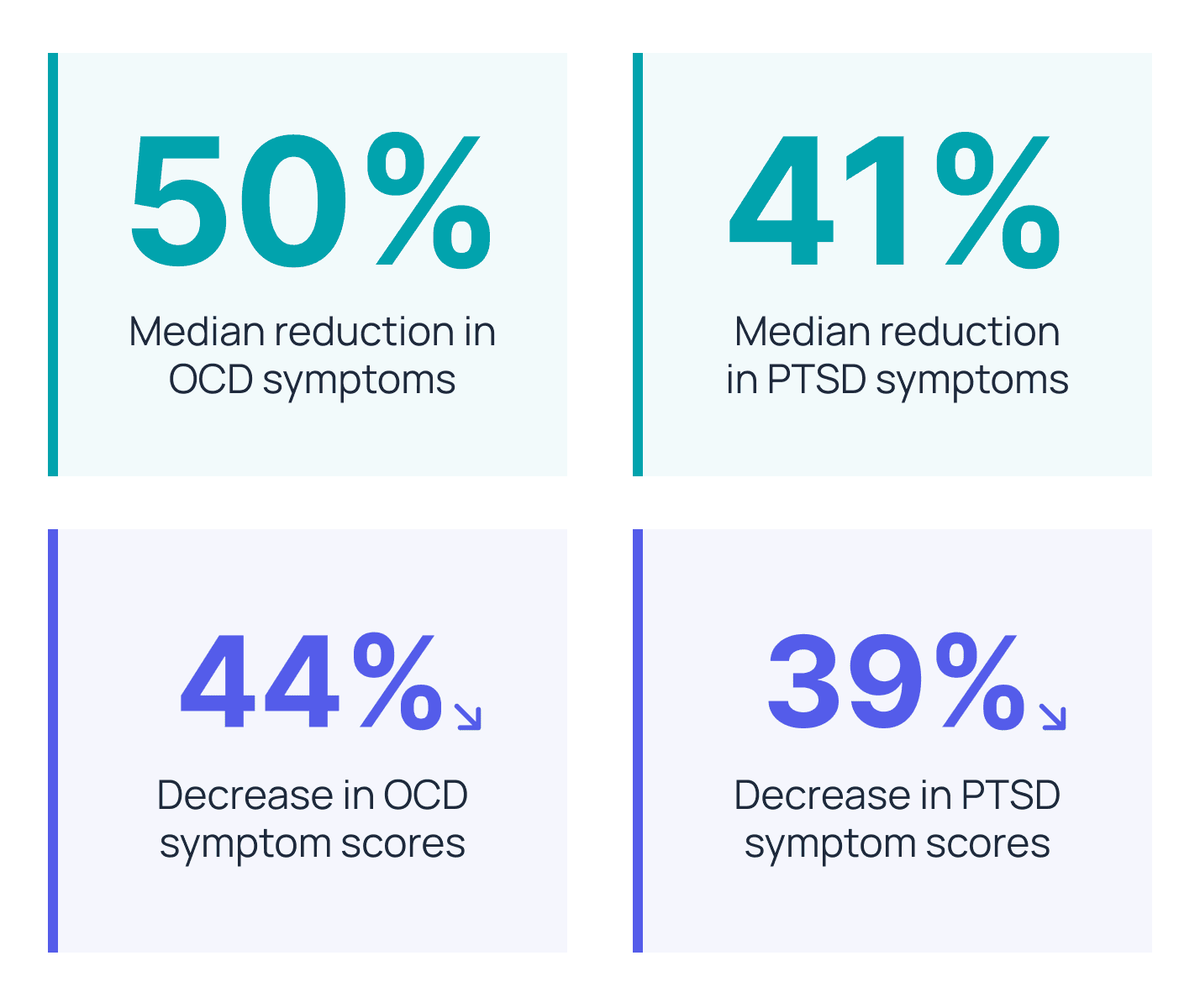
- Participants experienced a median reduction of about 50% in OCD symptoms and 41% in PTSD symptoms.
- OCD symptom scores decreased from 35.2 before treatment to 19.5 at the final assessment.
- PTSD symptom scores dropped from 43.5 to 26.4.
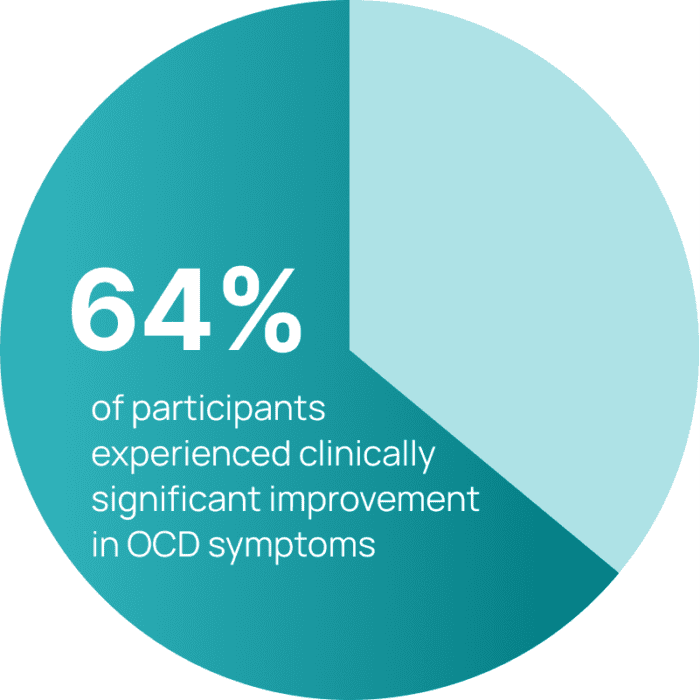
Researchers also evaluated whether people achieved a clinically significant improvement. This refers to an improvement large enough to make a meaningful difference in everyday life. Here’s what they found:
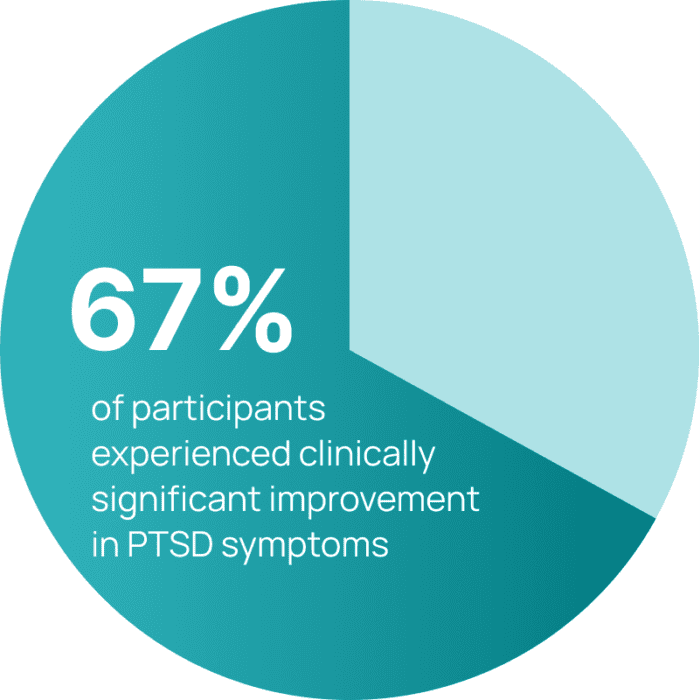
- About 67% of participants experienced clinically significant improvement in PTSD symptoms.
- About 64% of participants experienced clinically significant improvement in OCD symptoms.
- Nearly 50% of participants experienced clinically significant improvement in both conditions during the same course of treatment.
Treatment benefits extended beyond OCD and PTSD, too. Participants also reported lower levels of depression and anxiety, less impairment in daily functioning, and better overall quality of life.
Altogether, these findings suggest that addressing both conditions within a single course of care can help improve many aspects of a person’s well-being. Because everyone in the study received concurrent treatment, the research can’t tell us whether this approach works better than treating one condition first and the other later—but that people improved substantially while receiving both.
How these findings reflect NOCD’s approach to care
At NOCD, treatment always begins with a comprehensive evaluation. Our therapists work to understand how OCD and PTSD are affecting each person, and which condition is most disruptive, before developing an individualized treatment plan. Depending on someone’s needs, treatment may focus on OCD first, PTSD first, or both conditions concurrently. This study looked at outcomes among people who received both treatments concurrently.
One of the strengths of this study is that it reflects real-world outcomes. Participants received care through NOCD’s virtual therapy platform while going about their day-to-day lives—demonstrating that NOCD’s treatment model is effective in the environments where people actually experience their symptoms, outside of a carefully controlled research setting.
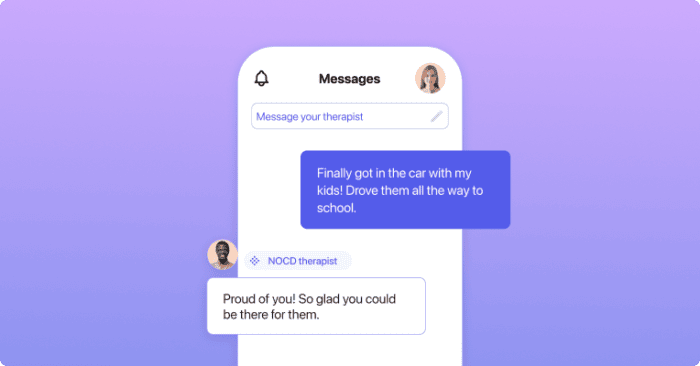
All NOCD Therapists are trained in ERP for OCD, and many are also trained in PE for PTSD. This allows our Members with OCD and PTSD to receive coordinated, integrated treatment for both conditions from one therapist, rather than trying to navigate multiple providers with different treatment plans.
NOCD Therapists evaluate which condition is causing the greatest disruption before recommending the treatment approach that best fits each person’s needs. For some, concurrent treatment makes the most sense. For others, a different treatment sequence may be more appropriate.
The study also demonstrates that specialized treatment can be provided effectively through NOCD’s virtual model. All treatment in this study was delivered through secure video therapy, demonstrating that integrated care for OCD and PTSD can be both accessible and effective when provided remotely by specialized clinicians. Between sessions, study participants had access to support through direct messaging with their therapist, dozens of virtual support groups, peer communities, and ERP exercises built by their therapist, all available in the NOCD app.
Publication in a peer-reviewed journal means these outcomes have undergone independent peer review, adding to a growing body of evidence supporting NOCD’s model of care. But these findings didn’t just get published. They also got put into practice: Since completing this research, NOCD has acted on the results.
When trauma needs its own dedicated treatment
For some people, PTSD is the condition that needs the most focused attention, and what they need most is care built specifically around trauma. This is why Rebound exists.
[Rebound product asset]
Rebound was built for people whose lives have been shaped by trauma, and who need care designed around the complexity of those experiences. Trauma can be complex or layered, and its effects can show up alongside anxiety, depression, difficulties in relationships, or patterns that have persisted for years. Rebound’s licensed therapists are extensively trained in PE for PTSD and in the treatment of symptoms and conditions that frequently co-occur with trauma. Rebound Members are also supported by a team of Survivor Advocates throughout their treatment, many of whom have lived experience with trauma themselves.
NOCD and Rebound are both specialty therapy brands built by Noto around a simple idea: people with complex mental health conditions deserve care designed specifically for them.
NOCD came first, and has since grown into the largest specialty care provider in mental healthcare, with an online community of millions of Members, hundreds of thousands of whom are enrolled in specialized therapy, a clinical network of over 1,500 OCD-specialty therapists, and over one million evidence-based therapy sessions delivered each year, with industry-leading outcomes.
That scale reflects an end-to-end rebuild of the mental healthcare system for one condition-specific population. Noto is transforming specialty therapy by expanding the same proven treatment model and deep clinical focus behind NOCD to other complex, underserved conditions, starting with trauma treatment through Rebound.
Rebound is open to anyone seeking treatment after trauma, and you don’t need to be a NOCD Member to begin treatment. NOCD Therapists can also connect their Members directly to Rebound when trauma-specific treatment is the best fit. In these cases, NOCD and Rebound both being Noto brands allows for a seamless transition and continuity of care.
What this means if you’re living with OCD and PTSD
OCD and PTSD are common, well-understood conditions with evidence-based treatments that help people regain their lives. If you’re experiencing symptoms of OCD, PTSD, or both, you’re not alone, and you don’t have to figure it out on your own.
At NOCD, all of our licensed therapists complete extensive, specialized training, starting with a comprehensive program and thorough evaluation process, including nine rigorous exams over a four-month period that every therapist must pass to become part of the NOCD network. This process equips them with a deep understanding of OCD, the conditions that commonly occur alongside it, and how to provide evidence-based treatment tailored to each person’s unique needs.
But make no mistake—this is only the beginning of our therapists’ learning process at NOCD. All NOCD Therapists continue to engage in professional development and receive rigorous oversight and support from our clinical leadership team while they are in practice. This approach has been able to consistently deliver life-changing results for people with OCD: Peer-reviewed research has shown that NOCD Therapy leads to significant improvements in symptoms twice as fast as typical ERP therapy.
For those beginning treatment, our therapists will perform a thorough assessment to determine what’s driving your symptoms and what treatment approach is most likely to help—whether that means focusing on one condition before the other, or treating both at the same time.
If PTSD is the condition that needs the most focused attention, Rebound therapists can provide personalized, evidence-based treatment grounded in a deep respect for how survival can uniquely shape people’s nervous systems, emotions, and reactions.
If you’re struggling with OCD and co-occurring PTSD or trauma, you can book a free call with NOCD to learn more about getting matched with an OCD-specialty therapist who is also trained in PE for PTSD. NOCD is available in all 50 U.S. states and several international countries, and is covered by insurance for over 138 million Americans.
If PTSD or trauma-related symptoms are disrupting your life, you can book a free call with Rebound to learn more about their approach to trauma-focused treatment. Rebound is available in all 50 U.S. states and accepts many leading insurance plans, including Aetna and many Blue Cross Blue Shield plans.


